
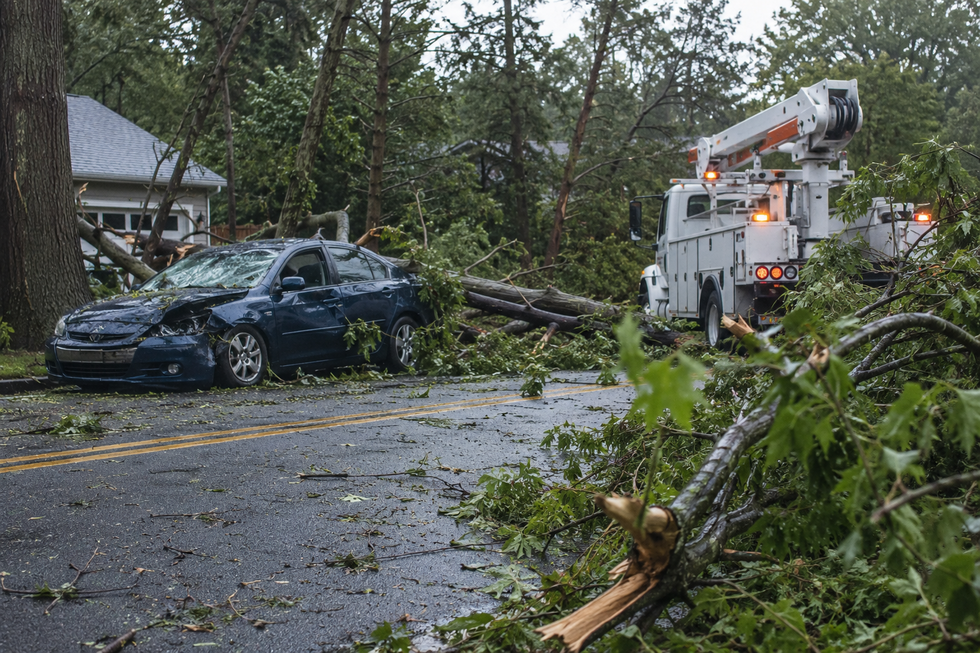
According to Patch, preliminary reports indicate that three tornadoes may have touched down across New Jersey during Tuesday's severe storms, prompting tornado warnings in Bergen, Essex, Morris, Passaic, Somerset, and Cape May Counties. The National Weather Service (NWS) is conducting storm surveys to determine the strength, paths, and official classification of the reported tornadoes. While New Jersey typically experiences only a few tornadoes each year, severe weather events like this can have consequences long after the skies clear. Fallen trees, roadway debris, damaged traffic signals, flooding, and power outages can create dangerous conditions for drivers and workers throughout the state.
Powerful thunderstorms swept across New Jersey this week, prompting tornado warnings in Bergen, Essex, Morris, Passaic, Somerset, and Cape May Counties. According to preliminary reports, three tornadoes may have touched down during the storm system, bringing damaging winds, heavy rain, fallen trees, power outages, and hazardous road conditions across much of the state.
For many people, the greatest danger isn't the tornado itself—it's what happens afterward.
Every year, severe weather contributes to motor vehicle accidents throughout New Jersey. Heavy rain, standing water, downed tree limbs, disabled traffic signals, and sudden traffic congestion create conditions where even careful drivers can find themselves involved in serious crashes. At the same time, employees working outdoors or responding to storm damage may face increased risks of work-related injuries while performing their duties.
If you were injured during or after these storms, it's important to understand that severe weather does not automatically eliminate your legal rights. Whether you're pursuing a New Jersey car accident claim or a New Jersey workers' compensation claim, the facts surrounding the incident—not simply the weather—often determine what compensation may be available.
At Khorozian Law Group, we represent individuals throughout New Jersey who have been injured in motor vehicle accidents and workplace accidents. Our goal is to help injured clients understand their legal options and pursue the compensation or benefits they deserve under New Jersey law.
Why Severe Weather Leads to More Car Accidents in New Jersey
Severe storms like the one that recently swept across New Jersey can transform familiar roads into dangerous driving environments within minutes. Heavy rain, damaging winds, and tornado-related debris create conditions where even cautious motorists may find it difficult to avoid a collision. Whether you're commuting on Interstate 80, the Garden State Parkway, or local roads throughout Bergen, Essex, Morris, or Passaic counties, hazardous weather significantly increases the risk of serious crashes.
Some of the most common storm-related hazards include:
- Hydroplaning caused by standing water
- Reduced visibility from heavy rainfall
- Downed trees blocking travel lanes
- Fallen power lines creating road closures
- Traffic signal outages at busy intersections
- Flying debris striking vehicles
- Sudden traffic slowdowns that lead to rear-end collisions
- Flooded roads that conceal dangerous pavement conditions
Commercial vehicles face additional risks during severe weather. Tractor-trailers, delivery vans, utility trucks, and buses require longer stopping distances on wet pavement and are more vulnerable to strong crosswinds. When conditions deteriorate quickly, a single loss of control can result in a devastating multi-vehicle collision involving several motorists.
Many people assume that if an accident occurs during a storm, no one can be held responsible. However, that is not always the case. Weather may contribute to a crash, but drivers still have a legal duty to operate their vehicles safely. Failing to reduce speed, following too closely, driving distracted, or ignoring hazardous road conditions can still constitute negligence under New Jersey law.
If you've been injured in a weather-related collision, speaking with an experienced New Jersey Car Accident Lawyer can help you understand whether another driver's actions contributed to the crash and what legal options may be available.
The same principle applies to commercial vehicles. Truck drivers and trucking companies must continue operating safely when severe weather develops. Decisions involving speed, route planning, driver fatigue, vehicle maintenance, and whether conditions were safe enough to remain on the road can all become critical issues during an investigation. These cases often require a detailed review of electronic logging data, maintenance records, and company safety practices, making it important to consult a Truck Accident Lawyer familiar with complex commercial vehicle claims.
Motorcyclists face even greater dangers after severe storms. Wet pavement, gravel, fallen branches, and roadway debris can quickly cause a rider to lose control. Because motorcycles provide far less protection than passenger vehicles, even a relatively minor crash can result in catastrophic injuries. If you were injured while riding during hazardous weather, a Motorcycle Accident Lawyer can help evaluate your legal rights.
Every accident is unique. Determining liability often requires reviewing police reports, photographs, witness statements, available surveillance or dashcam footage, roadway conditions, and weather data from the time of the collision. Preserving this evidence early can make a significant difference when pursuing compensation for your injuries.
If you suffered serious injuries after a storm-related crash, you may have the right to pursue compensation for medical expenses, lost wages, pain and suffering, and other damages through a New Jersey Personal Injury New Jersey Personal Injury claim, depending on the circumstances of the accident.
As New Jersey continues recovering from this week's severe weather, motorists should remain alert for lingering hazards, including damaged roadways, temporary traffic control devices, utility crews working near highways, and storm debris that may not be immediately visible. Even after tornado warnings have expired, dangerous driving conditions can persist for days, making extra caution essential.
Severe Storms Also Increase the Risk of Workplace Injuries
When severe weather strikes New Jersey, thousands of employees continue working despite dangerous conditions. Utility crews restore power, public works employees clear roadways, delivery drivers stay on schedule, construction projects continue, and emergency responders work around the clock to keep communities safe.
While these workers perform essential services, they also face a significantly greater risk of suffering serious on-the-job injuries.
Common occupations affected by severe weather include:
- Utility and power restoration crews
- Construction workers
- Roofing contractors
- Delivery drivers
- Commercial truck drivers
- Municipal and public works employees
- Highway maintenance crews
- Tree removal and debris cleanup crews
- Emergency responders
Heavy rain, strong winds, flooding, unstable ground, and reduced visibility can quickly turn an ordinary workday into a dangerous situation. Employees may be injured in motor vehicle crashes while driving for work, struck by falling tree limbs or debris, injured while operating heavy equipment, or suffer slip-and-fall accidents during cleanup operations.
If you are injured while performing your job duties—even if severe weather contributed to the incident—you may still be entitled to New Jersey Workers' Compensation benefits.
Unlike a traditional personal injury claim, workers' compensation generally does not require an employee to prove that anyone was negligent. The key question is whether the injury arose out of and occurred during the course of employment.
Benefits may include:
- Medical treatment authorized through workers' compensation
- Temporary disability benefits while you are unable to work
- Permanent disability benefits when appropriate
- Mileage reimbursement for qualified medical travel
- Ongoing medical care related to your work injury
Unfortunately, obtaining those benefits is not always straightforward. Employers or insurance carriers may question whether the injury was truly work-related, argue that a pre-existing condition is responsible, or delay authorization for necessary medical treatment.
AtKhorozian Law Group, we help injured workers throughout New Jersey navigate the workers' compensation process and pursue the medical care and wage replacement benefits they are entitled to receive under the law.
What Should You Do After a Storm-Related Car Accident or Workplace Injury?
The hours and days following an accident can have a significant impact on both your health and your legal claim. Whether you were injured in a New Jersey car accident or while working during severe weather, taking the right steps can help protect your rights.
1. Seek Medical Attention Immediately
Some injuries, including concussions, spinal injuries, and soft tissue damage, may not produce severe symptoms right away. Prompt medical evaluation also creates important documentation linking your injuries to the accident.
2. Report the Incident
If you were involved in a motor vehicle accident, contact law enforcement and obtain a police report whenever possible.
If you were injured on the job, notify your employer as soon as practical and follow your employer's reporting procedures. Delays in reporting a workplace injury can complicate a workers' compensation claim.
3. Preserve Evidence
When it is safe to do so, take photographs or videos of:
- Vehicle damage
- Roadway flooding or debris
- Downed trees or power lines
- Weather conditions
- The accident scene
- Visible injuries
This evidence may become valuable if liability or the circumstances of the accident are later disputed.
4. Follow Your Recommended Medical Treatment
Missing appointments or stopping treatment prematurely may affect both your recovery and your legal claim. Be sure to follow your physician's recommendations and keep copies of all medical records, work restrictions, and related documentation.
5. Speak With an Attorney Before Accepting a Settlement
Insurance companies often begin investigating claims immediately after an accident. Before accepting a settlement or providing recorded statements, it is important to understand your legal rights and whether additional compensation or benefits may be available.
Whether your injuries resulted from a storm-related motor vehicle accident or a workplace incident during severe weather, obtaining legal guidance early can help you make informed decisions throughout the claims process.
Frequently Asked Questions About Storm-Related Car Accidents and Workplace Injuries in New Jersey
Can I recover compensation if bad weather contributed to my car accident?
Possibly. Severe weather alone does not automatically prevent you from pursuing a claim. New Jersey drivers are expected to adjust their driving to match road and weather conditions. If another driver was speeding, following too closely, driving distracted, or otherwise acting negligently during the storm, they may still be responsible for your injuries.
What if I was driving for work when the accident happened?
If you were performing job duties when the collision occurred, you may have a Workers' Compensation claim in addition to other legal rights, depending on the circumstances. This can include delivery drivers, utility workers, construction employees, municipal workers, and many other occupations that require travel during the workday.
Should I avoid driving through flooded roads?
Yes. Even shallow floodwater can conceal roadway damage or cause a vehicle to lose traction. Flooded roads also increase the risk of hydroplaning and stalling, creating dangerous conditions for everyone on the roadway.
How long do I have to file a claim in New Jersey?
Deadlines vary depending on the type of claim. Workers' compensation cases and motor vehicle accident claims are subject to different legal requirements and time limits. Because important evidence can disappear quickly after severe weather, it is generally best to seek legal guidance as soon as possible.
What evidence should I keep after a storm-related accident?
If possible, preserve:
- Photographs of the accident scene
- Vehicle damage
- Roadway conditions
- Flooding or storm debris
- Police reports
- Medical records
- Witness contact information
- Insurance correspondence
The more documentation you have, the easier it may be to establish what happened and support your claim.
Severe Weather May Be Unpredictable—Your Legal Rights Shouldn't Be
The recent tornadoes reported across New Jersey serve as an important reminder that dangerous weather can quickly create hazardous conditions for drivers and workers alike. While no one can control the weather, everyone has a responsibility to act reasonably and safely when severe conditions develop.
If you were injured in a New Jersey car accident or while performing your job during or after severe weather, understanding your legal rights early can make a meaningful difference in protecting your health, your financial stability, and your future.
At Khorozian Law Group, we proudly represent injured drivers and workers throughout New Jersey. Whether your injuries resulted from a serious motor vehicle collision or an on-the-job accident, our team is committed to helping you understand your options and pursue the benefits or compensation available under New Jersey law.
📞 If you or a loved one were injured in New Jersey, call Khorozian Law Group at (201) 944-9200 or use our Online Form for a FREE consultation. You do not pay attorney's fees unless we recover compensation on your behalf.
Comments
There are no comments for this post. Be the first and Add your Comment below.
Leave a Comment