
When someone is injured in a car accident while working in New Jersey, the case may involve more than a traditional Workers' Compensation claim. Depending on who caused the crash, an injured employee may also have a New Jersey personal injury claim against a negligent driver or another third party.
This distinction matters because Workers' Compensation and personal injury in NJ are separate legal systems that may provide different benefits and forms of compensation. An experienced NJ injury attorney can evaluate whether an injured worker has a Workers' Compensation claim, a third-party personal injury claim, or potentially both.
The issue is especially timely as students return to school across New Jersey. The New Jersey Department of Labor and Workforce Development (NJDOL) recently launched a statewide
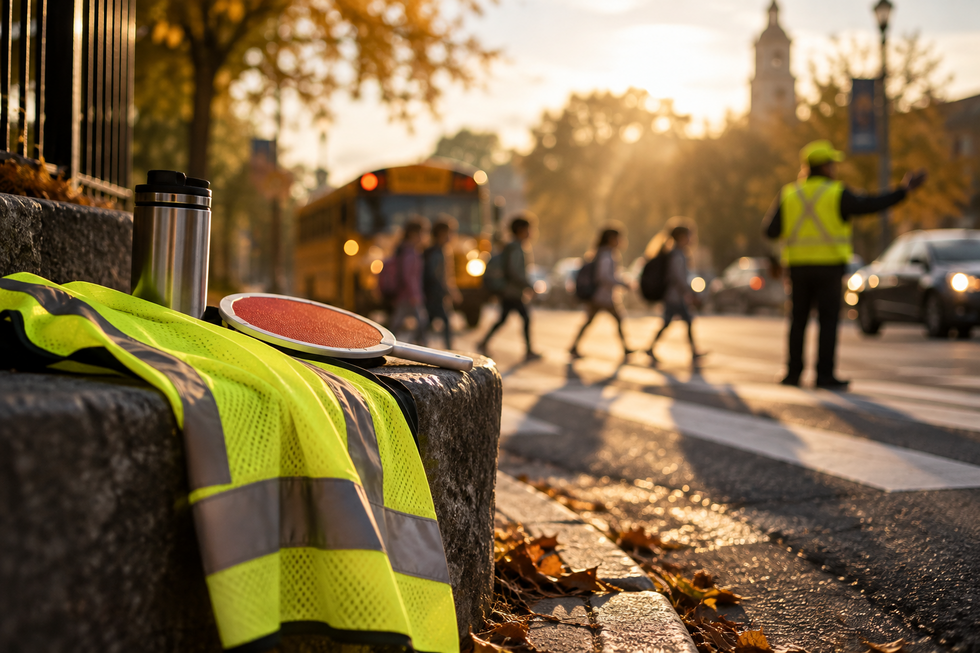
Back-to-School Campaign: “School’s Back, Slow Down in the Zone — Get Kids & Guards Safely Home”campaign aimed at protecting school crossing guards from motorists. NJDOL reports that three New Jersey crossing guards were killed and nine were injured during the past three years. From 1993 through May 2026, 19 crossing guards were killed after being struck by drivers and more than 390 were injured on the job in motor vehicle accidents.
But crossing guards are not the only employees exposed to traffic while working. Construction crews, delivery drivers, sanitation workers, utility employees, tow-truck operators, first responders, landscapers, and other workers can suffer serious injuries in motor vehicle accidents while performing their jobs.
When another driver causes the accident, the injured employee may need to consider both Workers' Compensation benefits and a personal injury claim in NJ.
If you or a loved one were injured in New Jersey, call Khorozian Law Group at (201) 944-9200 or use our Online Form for a FREE consultation. You do not pay attorney's fees unless we recover compensation on your behalf.
When Is a Car Accident Considered a Workplace Accident in New Jersey?
A workplace accident does not have to occur inside an office, warehouse, construction site, or factory.
New Jersey Workers' Compensation generally provides benefits for qualifying injuries arising out of and in the course of employment. The New Jersey Division of Workers' Compensation explains that employees who suffer job-related injuries or illnesses may be entitled to Workers' Compensation benefits.
That can include employees whose jobs place them on New Jersey roads or around moving vehicles.
For example, a potential Workers' Compensation claim could arise when a crossing guard is struck while directing traffic, a construction worker is injured in a work zone, a sanitation employee is hit while collecting garbage, a delivery driver is injured while making deliveries, or a utility or tow-truck worker is struck while performing roadside duties.
Whether an individual accident qualifies depends on the circumstances surrounding the injury and what the employee was doing when it occurred.
NJ Workers' Compensation Benefits After a Work-Related Car Accident
New Jersey Workers' Compensation is generally a no-fault system. An injured employee ordinarily does not need to establish that the employer negligently caused the accident to receive Workers' Compensation benefits.
Depending on the circumstances and severity of the injury, benefits may include authorized medical treatment, temporary total disability benefits, permanent partial disability benefits, or permanent total disability benefits.
Medical Treatment After a Workplace Accident
Medical treatment can become one of the most important issues following a serious workplace injury.
Under New Jersey Workers' Compensation, the employer or its insurance carrier generally has the right to select the authorized medical provider. Authorized treatment may include physician examinations, diagnostic testing, physical therapy, specialist evaluations, injections, surgery, or other medically necessary treatment depending on the injury.
This differs from many personal injury NJ cases, where medical treatment and insurance issues may operate differently.
Workers should therefore report an accident to their employer promptly and determine how authorized medical care will be provided.
Temporary Disability Benefits When You Cannot Work
A motor vehicle accident can leave an injured employee unable to perform regular job duties for weeks or even months.
According to NJDOL, when a qualifying work-related injury results in disability lasting more than seven days, an employee may be eligible fortemporary total disability benefits, generally paid at 70% of the worker's average weekly wage, subject to the applicable statewide minimum and maximum rates.
These wage-replacement benefits may be particularly important after injuries requiring extended physical therapy, surgery, significant work restrictions, or prolonged recovery.
Can You File Workers' Compensation and a Personal Injury Claim in NJ?
Potentially, yes.
This is one of the most important distinctions when someone is injured by a motor vehicle while working.
Workers' Compensation generally concerns benefits available through the injured employee's employer and Workers' Compensation insurance carrier.
Athird-party personal injury claim, however, may arise when someone outside the employment relationship negligently causes the accident.
Consider a crossing guard who is performing assigned duties when an unrelated motorist fails to stop and strikes the worker. The injured employee may potentially have a Workers' Compensation claim arising from the workplace accident while also having a personal injury claim against the negligent driver.
Similar circumstances can arise when a construction worker, sanitation employee, delivery driver, utility worker, first responder, or other employee is injured because of another driver's negligence.
An injury attorney evaluating this type of accident should therefore consider more than simply whether Workers' Compensation coverage exists.
When Should an Injured Worker Contact a Car Accident Lawyer in NJ?
If another motorist caused a work-related collision, speaking with a car accident lawyer in NJ may be important even when Workers' Compensation benefits are already being provided.
The two claims serve different purposes.
Workers' Compensation may provide authorized medical care and disability benefits without requiring the employee to establish employer negligence. A third-partypersonal injury claim in NJ, on the other hand, may seek damages from a negligent person or company responsible for causing the accident.
A car accident attorney in NJ can investigate how the collision occurred, identify potentially responsible parties, review available automobile insurance coverage, preserve important evidence, and determine whether a third-party claim may exist.
Because Workers' Compensation and third-party recoveries can interact under New Jersey law, these cases should be evaluated carefully rather than treated as completely unrelated claims.
Workers' Compensation and Third-Party Claims Can Overlap
An injured employee generally cannot simply collect duplicate compensation for the same loss from multiple sources without considering New Jersey's reimbursement rules.
NJDOL explains that when an injured employee receives Workers' Compensation benefits and also obtains a recovery from a responsible third party, the employer or Workers' Compensation carrier may have statutory rights concerning that recovery.
This is one reason why consulting an NJ injury attorney can be particularly important when a workplace accident also involves a negligent driver.
A lawyer can evaluate the Workers' Compensation claim alongside the potential third-party claim and determine how one may affect the other.
Why New Jersey Is Focusing on Crossing Guard Safety
New Jersey's recent crossing-guard campaign illustrates how significant roadway hazards can become workplace hazards.
Earlier in 2026, NJDOL completed a statewide crossing-guard safety initiative that reached5,327 crossing guards across 490 municipalities in all 21 New Jersey counties. The initiative included safety inspections, education, training efforts, and information concerning workplace protections.
NJDOL also reports that its Public Employees Occupational Safety and Health program conducted 198 inspections affecting 1,508 crossing guards as part of the initiative.
For September, the state's safety message is being displayed along several heavily traveled New Jersey roads, including Route 4 near Route 17 in Paramus, as well as locations in South Brunswick, Wharton, and Parsippany.
The Paramus location makes the campaign particularly relevant for workers and motorists inBergen County, where heavily traveled roads routinely place employees and vehicles in close proximity.
What Should You Do If You Are Hit by a Car While Working in NJ?
After a work-related motor vehicle accident, an employee should report the injury to the employer as soon as possible. NJDOL explains that notice may be provided to a supervisor, personnel office, or another person in authority.
When another vehicle is involved, information concerning the motor vehicle accident may also become important to a potential third-party claim.
When possible, preserve the police report or incident information, photographs and videos, witness contact information, information identifying the vehicles and drivers involved, insurance information, medical records, and employment information documenting that the accident occurred while you were performing job duties.
Anaccident attorney in NJ can use this information to evaluate whether parties other than the employer may bear responsibility for the accident.
What If Workers' Compensation Denies Medical Treatment?
Not every New Jersey Workers' Compensation claim proceeds without a dispute.
An insurance carrier may dispute whether an injury is work-related, decline to authorize additional medical treatment, terminate treatment, challenge disability status, or dispute entitlement to benefits.
New Jersey provides procedures through the Division of Workers' Compensation for resolving disputes over benefits, including the filing of a formal Claim Petition. In appropriate circumstances involving medical or temporary disability benefits, a worker may also seek relief through a Motion for Medical and/or Temporary Benefits.
An experienced NJ Workers’ Compensation lawyer can evaluate the denial and determine what legal options may be available.
What Compensation May Be Available After a New Jersey Workplace Accident?
The potential recovery depends on the facts of the accident and which claims are legally available.
Workers' Compensation benefits and damages available through a third-party personal injury case are not identical. That is why identifying all potentially responsible parties can be important after a serious work-related accident.
For example, if a negligent motorist strikes an employee who is working, the Workers' Compensation carrier may be responsible for qualifying WC benefits while the negligent driver's insurance becomes relevant to a separate third-party claim.
A car accident attorney NJ evaluation may therefore uncover an additional source of recovery that would not be addressed simply by filing the Workers' Compensation claim.
Speak With a NJ Injury Attorney After a Work-Related Accident
Being struck by a vehicle while working can create a complicated intersection between New Jersey Workers' Compensation and personal injury law.
There may be issues involving authorized medical treatment, temporary disability benefits, permanent injuries, lost wages, automobile insurance, third-party negligence, and the Workers' Compensation carrier's rights if compensation is recovered from another responsible party.
The NJDOL crossing-guard campaign highlights a broader reality: for thousands of New Jersey employees, traffic is part of the workplace.
Whether you are a crossing guard, construction worker, delivery driver, sanitation employee, utility worker, tow-truck operator, first responder, or another employee injured on the job, understanding whether you have a Workers' Compensation claim, a third-party claim, or both can make an important difference.
A NJ Workers' Compensation lawyer, personal injury lawyer, or accident lawyer in NJ can evaluate the circumstances and determine which claims may be available.
If you or a loved one were injured in New Jersey, call Khorozian Law Group at (201) 944-9200 or use our Online Form for a FREE consultation. You do not pay attorney's fees unless we recover compensation on your behalf.
lated at 70% of the worker's average weekly wage, subject to New Jersey's applicable minimum and maximum rates.
Those benefits can be particularly important when injuries require extended treatment, physical therapy, surgery, or significant time away from work.
Can You Have a Workers' Compensation Claim and a Personal Injury Claim?
Potentially, yes—and this is one of the most important issues when an employee is injured by a vehicle while working.
Workers' Compensation generally concerns the relationship between the injured employee and the employer/Workers' Compensation carrier.
But suppose someone outside that employment relationship caused the accident.
For example, imagine a crossing guard performing assigned duties when an unrelated motorist fails to stop and strikes the guard.
The worker may have a Workers' Compensation claim arising from the workplace injury. Depending on the facts, the worker may also have a potential third-party personal injury claim against the negligent motorist.
The same issue can arise when a road worker, delivery employee, sanitation worker, utility worker, or another employee is injured because of the actions of an unrelated driver.
These claims are not simply interchangeable. New Jersey law contains rules governing how Workers' Compensation benefits interact with money recovered from a responsible third party. NJDOL specifically notes that an employer or Workers' Compensation carrier may be entitled to a credit when an injured worker obtains a recovery from a third party responsible for a compensable work injury.
For that reason, cases involving both Workers' Compensation and third-party liability should be evaluated carefully.
Why New Jersey Is Focusing on Crossing Guard Safety
NJDOL's current campaign goes beyond asking motorists to slow down.
Earlier in 2026, the Department completed a statewide crossing-guard safety initiative that reached 5,327 crossing guards across 490 municipalities in all 21 New Jersey counties. The initiative included inspections, safety information, training efforts, and outreach concerning workplace protections, including Workers' Compensation.
NJDOL reports that its Public Employees Occupational Safety and Health program conducted 198 inspections affecting 1,508 crossing guards. Those inspections resulted in hazard-awareness letters as well as citations involving personal protective equipment and training.
For September, safety messages are also being displayed along several heavily traveled New Jersey roads, including Route 4 near Route 17 in Paramus, as well as locations in South Brunswick, Wharton and Parsippany.
For Bergen County residents in particular, seeing that message along Route 4 is a timely reminder that traffic safety is also a workplace-safety issue.
What Should You Do After Being Hit by a Vehicle While Working in NJ?
An injured worker should report the accident to the employer as soon as possible. NJDOL states that notice may be provided to a supervisor, personnel office, or another person in authority, and that the notice does not necessarily have to be in writing.
If medical attention is necessary, the worker should also request treatment promptly. Once an accident is reported, the employer's Workers' Compensation carrier evaluates the claim and, if accepted, directs the employee to an authorized medical provider.
When another driver may have caused the accident, preserving information about the motor vehicle collision can also become important. Depending on the circumstances, that can include the police report, photographs, witness information, vehicle and insurance information, and other evidence concerning how the accident happened.
What If the Workers' Compensation Carrier Denies Treatment or Benefits?
A workplace injury does not always result in benefits being provided without disagreement.
Disputes can arise over whether an injury was work-related, whether additional medical treatment should be authorized, or whether temporary disability benefits should be paid.
New Jersey permits an injured worker to pursue a formal Claim Petition or an Application for an Informal Hearing with the Division of Workers' Compensation when disputes arise over entitlement to benefits.
That can become particularly important when an employee remains injured but treatment has been denied or discontinued.
NJ Workers' Compensation and Personal Injury Claims Can Overlap
Being struck by a vehicle while working can create a more complicated legal situation than an ordinary workplace injury.
There may be questions involving Workers' Compensation coverage, authorized medical treatment, lost wages, permanent injuries, automobile insurance, third-party negligence, and reimbursement or credit rights involving the Workers' Compensation carrier.
The recent NJDOL crossing-guard campaign highlights a broader reality:for thousands of New Jersey employees, traffic is part of the workplace.
Understanding which claims may be available—and how those claims interact—can be important after a serious work-related motor vehicle accident.
If you or a loved one were injured in New Jersey, call Khorozian Law Group at (201) 944-9200 or use our Online Form for a FREE consultation. You do not pay attorney's fees unless we recover compensation on your behalf.
Comments
There are no comments for this post. Be the first and Add your Comment below.
Leave a Comment