
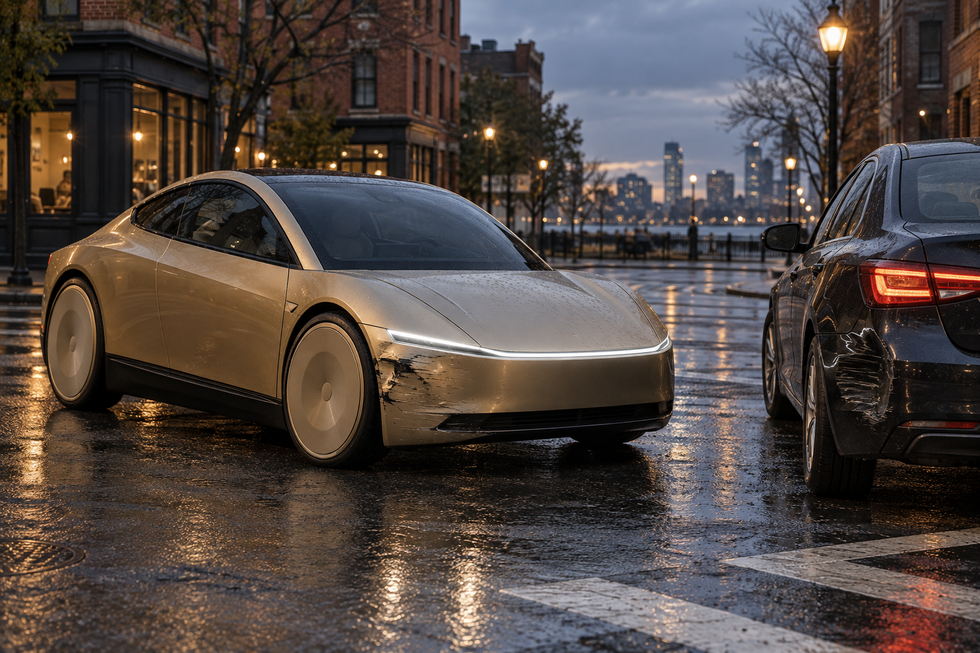
Tesla's Cybercab is bringing renewed attention to an important question: Who may be responsible when a vehicle operating without a human driver causes an accident?
A recent Futurism report discussing potential Tesla Cybercab accident claims highlights how personal injury attorneys are preparing to address questions involving driverless vehicles, manufacturers, transportation companies, and injured passengers.
For New Jersey motorists, the broader issue is how driving automation could affect an accident investigation and a potential injury claim. Although this article does not report a confirmed Cybercab crash or deployment in New Jersey, the discussion raises questions that matter whenever automated technology is involved in a collision.
An NJ car accident lawyer investigating such an accident would need to determine which system was operating, whether human supervision was required, what caused the collision, and which parties may bear legal responsibility.
If you or a loved one were injured in New Jersey, call Khorozian Law Group at (201) 944-9200 or use our Online Form for a FREE consultation. You do not pay attorney's fees unless we recover compensation on your behalf.
Is a Driverless Vehicle the Same as a Car With Driver Assistance?
No. Understanding the difference can be essential when evaluating responsibility after a crash.
The National Highway Traffic Safety Administration explains that driving automation has different levels. At Level 2, a system may control steering and acceleration or braking, but the human driver must remain attentive and responsible for driving.
At Level 4, the system handles the driving task within its defined operating conditions without requiring a passenger to take control.
That distinction affects the questions an investigation must answer.
Was a human driver required to monitor the road? Was someone expected to take over? Was the vehicle operating within the conditions the system was designed to handle?
Calling a vehicle “self-driving” does not establish its capabilities or identify what controlled it immediately before impact. The actual system, operating mode, and circumstances must be examined.
Who Could Be Responsible After a Tesla Cybercab Accident?
There is no single answer that applies to every automated vehicle collision.
Depending on the evidence and applicable law, an investigation could examine the actions or potential responsibility of:
- Another motorist who caused or contributed to the collision.
- The company operating the transportation service.
- A vehicle or component manufacturer, if an alleged defect contributed to the injuries.
- A maintenance or repair provider whose work contributed to a failure.
- A human driver or operator, where the system required human participation.
These are potential areas of investigation. Simply manufacturing, owning, maintaining, or operating a vehicle does not automatically establish liability.
A claim requires a legally supported basis for responsibility and evidence connecting the conduct or alleged defect to the accident and resulting harm.
Why the Sequence of Events Matters in an Automated Vehicle Crash
The presence of automated technology does not eliminate the need to reconstruct the collision.
Consider two hypothetical situations.
Scenario 1: Another Driver Strikes a Stopped Automated Vehicle
An automated vehicle stops at a red light. A distracted motorist approaches from behind and crashes into it.
The fact that the first vehicle was operating with automation would not, by itself, establish that its technology caused the collision. Investigators would examine the approaching driver's actions and the surrounding circumstances.
Scenario 2: An Automated Vehicle Enters an Intersection Against a Red Light
Now imagine that an automated vehicle enters an intersection against a red light and strikes another car.
The investigation could involve the traffic signal, available video, vehicle speed, system records, braking activity, and possible mechanical or operational problems.
Investigators would need to determine what happened and why before reaching a conclusion about responsibility.
Could an Automated Driving System Contribute to an Accident?
Potentially.
An investigation may examine whether the system detected a hazard, responded appropriately, or operated outside the conditions it was designed to handle.
Questions could include:
- Did the vehicle detect stopped or slowing traffic?
- Did it recognize a pedestrian or another vehicle?
- How did it respond to a traffic signal or roadway obstruction?
- Did it brake or steer before impact?
- Were there relevant maintenance problems or system warnings?
- Was human intervention required or attempted?
However, a crash does not automatically prove a software or equipment defect.
A claim involving an alleged defect may require technical records, expert analysis, and application of the governing product-liability law. An NJ injury attorney would need to distinguish a suspected malfunction from a failure that can be established through evidence.
What Evidence Can a Car Accident Lawyer Investigate?
Police reports, photographs, witness accounts, roadway conditions, and medical records remain important after a collision involving driving automation.
Additional evidence may exist in the vehicle's systems or the transportation company's records.
Depending on what was recorded and retained, potentially relevant information could include:
- Onboard camera footage.
- Available sensor and vehicle event data.
- Records identifying which driving system was engaged.
- Vehicle speed, steering, and braking information.
- Software versions and update records.
- Inspection, maintenance, and repair documents.
- Trip confirmations and service records.
- Communications involving the vehicle's operation.
Not every vehicle records or retains the same information. An injured person also may not be able to obtain these records directly.
A car accident attorney in NJ can evaluate which evidence may be relevant and what steps may be appropriate to request its preservation before information becomes unavailable.
Does a Government Crash Report Prove That Automation Caused the Accident?
No.
NHTSA requires identified manufacturers and operators to report certain crashes involving automated driving systems and advanced driver-assistance systems. The agency also explains that the resulting data have limitations.
A collision appearing in the reporting system does not, by itself, establish that the automated system caused it.
Similarly, raw crash totals require context before they can support meaningful comparisons between vehicles or companies.
For an individual personal injury claim, the focus remains on the circumstances of that collision and the evidence supporting responsibility.
Who Pays Medical Bills After an Automated Vehicle Accident?
The answer depends on the applicable policies, the vehicles involved, the injured person's status, and the law governing the accident.
New Jersey's automobile insurance system includes Personal Injury Protection, commonly called PIP.
The New Jersey Department of Banking and Insurance explains that PIP provides coverage for injuries sustained by covered persons in automobile accidents, subject to applicable requirements and policy terms.
However, an injured person should not assume that the same insurance arrangement applies to every privately owned vehicle, commercial transportation service, or driverless taxi.
Determining which coverage may pay for medical treatment is separate from determining who ultimately caused the collision.
An attorney evaluating the accident may need to review personal automobile coverage, applicable commercial policies, and other potentially relevant insurance arrangements.
Can You Seek Compensation for Pain and Suffering?
Potentially, but the available claim depends on the circumstances and governing law.
For New Jersey automobile claims, the injured person's lawsuit option may be relevant. The New Jersey Department of Banking and Insurance distinguishes Limited Right to Sue from Unlimited Right to Sue.
Where the limited option applies, pursuing pain-and-suffering damages generally requires a qualifying injury.
The application of those rules should not be assumed solely because a crash involved an automated vehicle. The vehicle classification, insurance arrangements, parties, and legal claims require review.
A New Jersey personal injury attorney can evaluate these issues alongside medical expenses, lost income, and other accident-related losses.
What Should You Do After a Crash Involving an Automated Vehicle?
Your immediate priorities should be safety and appropriate medical attention.
Report the collision and give an accurate account of what you observed. If you do not know whether an automated driving system was engaged, explain that rather than making an assumption.
When circumstances permit, preserve:
- Photographs of the vehicles and accident scene.
- Vehicle identification and license plate information.
- Witness names and contact information.
- Police report or incident information.
- Original dashcam or other video footage.
- Trip receipts, app messages, and communications with the transportation service.
- Medical records, insurance correspondence, and documentation of expenses.
For passengers, the trip confirmation may help identify the vehicle and company involved.
Keep an accurate record of your symptoms, treatment, and time missed from work. These details may become relevant when evaluating the consequences of the accident.
What If a New Jersey Resident Is Injured in a Driverless Taxi in Another State?
Living in New Jersey does not automatically mean New Jersey law governs an accident elsewhere.
The crash location, the parties involved, insurance policies, and other circumstances may affect which law applies and where a claim can be pursued.
A New Jersey resident injured while traveling should therefore identify where the collision occurred and preserve the transportation service's trip information.
The legal analysis must address the actual accident and jurisdiction rather than assume that New Jersey automobile insurance and liability rules apply everywhere.
Speak With a NJ Car Accident Lawyer About Your Legal Options
A collision involving driving automation may raise unfamiliar technical questions. For an injured person, however, the immediate concerns remain medical treatment, missed work, expenses, and recovery.
Understanding what controlled the vehicle, what evidence exists, and which insurance policies may apply can be important when evaluating a potential claim.
Khorozian Law Group represents people injured in New Jersey motor vehicle accidents. An attorney can review the circumstances of a collision, identify issues requiring further investigation, and explain the legal options that may be available.
📞 If you or a loved one were injured in New Jersey, call Khorozian Law Group at (201) 944-9200 or use our Online Form for a FREE consultation. You do not pay attorney's fees unless we recover compensation on your behalf.
Comments
There are no comments for this post. Be the first and Add your Comment below.
Leave a Comment